
Ex–Haridwar, Rishikesh / Dehradun Airport
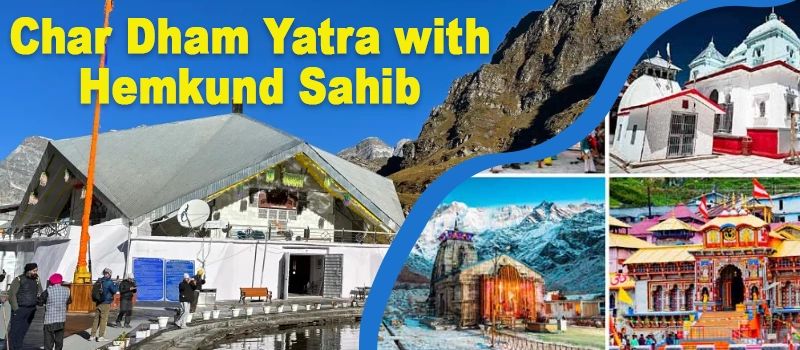
The Char Dham Yatra of Uttarakhand — comprising Yamunotri, Gangotri, Kedarnath, Shree Hemkund Sahib and Badrinath — is one of the holiest pilgrimages in India. This sacred journey through the Garhwal Himalayas is believed to cleanse the soul and grant moksha (liberation). Each destination holds deep mythological significance, natural splendor, and centuries-old spiritual tradition.
⛰️ Mussoorie – The Queen of Hills
💦 Kempty Fall – A famous cascading waterfall near Mussoorie
🕉️ Shiv Gufa – A sacred cave temple dedicated to Lord Shiva
🛕 Kashi Vishwanath Temple (Uttarkashi) – An ancient and revered Shiva temple
🏞️ Harsil Valley – A serene Himalayan valley known for apple orchards and river views
🌄 Chopta – The “Mini Switzerland of India,” base for Tungnath trek
🙏 Panch Prayag – The five sacred river confluences of Uttarakhand
🏔️ Joshimath – A holy town and gateway to Badrinath and Auli
🎿 Auli – A popular hill resort and skiing destination
🥾 Govindghat – The starting point for Hemkund Sahib and Valley of Flowers
🏘️ Mana Village – India’s last village near the Indo-Tibetan border
🌊 Devprayag – The confluence of Alaknanda and Bhagirathi rivers
🌊 Rudraprayag – The sacred meeting point of Alaknanda and Mandakini rivers
🧘 Rishikesh – The Yoga Capital of the World
Distance/Time: 210 km / 7–8 hrs
Drive from Haridwar via the beautiful hill station of Mussoorie, visiting Mussoorie Lake and Kempty Falls on the way. Check into your hotel at Barkot and relax.
Overnight stay in Barkot.
Distance: 36 km drive + 6 km trek (each side)
Early morning drive to Jankichatti/Phoolchatti and start your trek to Yamunotri Temple. After a holy dip in Tapt Kund and darshan of Goddess Yamuna, return to Barkot.
Overnight stay in Barkot.
Distance/Time: 100 km / 4 hrs
After breakfast, drive to Uttarkashi, visiting Shiv Gufa on the way. On arrival, visit the Kashi Vishwanath Temple and check in at your hotel.
Overnight stay in Uttarkashi.
Drive: 100 km / ~4 hrs | Trek: 14 km / 6–7 hrs | Altitude: 3,775 m
Early morning departure from Uttarkashi towards Gangotri via the scenic Harsil Valley. On arrival, take a holy dip in the Bhagirathi River and perform darshan at Gangotri Temple. Later, begin the trek towards Bhojbasa via Chirbasa, following the Bhagirathi River.
Reach Bhojbasa by evening. Relax and enjoy the sunset over the Bhagirathi group of peaks.
Gangotri Temple, built in the 18th century, is a white granite shrine dedicated to Goddess Ganga. Nearby is the sacred Bhagirath Shila, believed to mark the spot where Ganga descended to Earth.
The temple opens on Akshay Tritiya and closes on Diwali. In winter, the idol is shifted to Mukhba village.
Overnight stay at camps in Bhojbasa.
Trek Distance: 8 km (round trip) | Altitude: 3,890 m
After breakfast, trek to Gaumukh Glacier, the sacred source of the River Ganga. Spend time exploring the glacier area and absorbing the spiritual atmosphere before returning to Bhojbasa.
Overnight stay at camps in Bhojbasa.
Trek: 14 km / 6–7 hrs | Drive: 100 km / ~4 hrs
After breakfast, trek downhill to Gangotri. On arrival, continue the drive to Uttarkashi. Check in at the hotel and rest.
Overnight stay in Uttarkashi.
Distance/Time: 220 km / 8–9 hrs
Drive to Guptkashi along the Mandakini River. Visit the Ardh Narishwar Temple, symbolizing the unity of Lord Shiva and Goddess Parvati.
Overnight stay in Guptkashi.
Trek: 18 km from Gaurikund
Early morning drive to Sonprayag and Gaurikund. Trek to Kedarnath or take pony/doli (own cost). After darshan, stay near the temple.
Overnight stay in Kedarnath.
Morning pooja at Kedarnath Temple, followed by trek back to Gaurikund. Drive onward to Guptkashi.
Overnight stay in Guptkashi.
Distance: 200 km | Drive Time: 9–10 hrs | Altitude: 3,133 m
After early breakfast (around 07:00 AM), depart from Guptkashi towards Joshimath. En route, enjoy scenic views of the Chopta Valley, famous for its alpine meadows and Himalayan landscapes.
On arrival, check in at the hotel. Rest of the day is free for rest and acclimatization.
Overnight stay in Joshimath.
Drive: ~14 km | Trek: Govindghat to Ghangaria | Altitude: 3,049 m
After breakfast, drive to Govindghat, the base point for the trek to Ghangaria. Begin your trek to Ghangaria, a small Himalayan village and base camp for Valley of Flowers and Hemkund Sahib.
On arrival, check in at the hotel. Rest of the day is free for acclimatization.
Ghangaria is a seasonal settlement located at the confluence of the Bhyundar Ganga and Pushpawati Rivers. It is the last human habitation in the Bhyundar Valley and remains open from May to September due to heavy winter snowfall.
It serves as the primary base for visiting Hemkund Sahib (approx. 6 km).
Overnight stay in Ghangaria.
Early morning trek from Ghangaria to Shri Hemkund Sahib, one of the highest Sikh pilgrimage sites in the world. The trail passes through alpine meadows, rare Himalayan flora, and breathtaking mountain scenery.
Upon reaching Hemkund Sahib, spend time in prayer near the sacred glacial lake. Trek back to Ghangaria by afternoon.
Overnight stay in Ghangaria.
Trek: 14 km (downhill) | Drive: ~30 km | Altitude: 3,133 m
After breakfast, trek down from Ghangaria to Govindghat and then drive to Badrinath. On arrival, check in at the hotel.
Pilgrims may take a holy bath at Tapt Kund before attending Darshan and Evening Aarti at Badrinath Temple. Later, visit Mana Village, Vyas Gufa, Mata Murti Temple, Charan Paduka, Bhim Pul, Vasundhara Waterfall, and the origin of the Saraswati River.
Badrinath is one of the Ancient Four Dhams of India, located between the Nar and Narayan mountain ranges with Neelkanth Peak in the backdrop. The name “Badri Van” comes from the wild berries that once covered the region.
Overnight stay in Badrinath.
Distance/Time: 160 km / ~7 hrs
After breakfast, visit Narsingh Temple in Joshimath, the winter seat of Lord Badrinath. Continue the drive to Rudraprayag, the sacred confluence of the Mandakini and Alaknanda Rivers.
Overnight stay in Rudraprayag.
Distance/Time: 165 km / 5–6 hrs
After breakfast, drive to Rishikesh. Visit Laxman Jhula, Ram Jhula, and local temples before proceeding to Haridwar or Dehradun Airport for departure.
Distance/Time: ~245 km / 6–7 hrs
Breakfast at the hotel. Drive back to Delhi. Drop-off at airport / railway station / hotel / home as per your departure plan.